Wednesday, 8 May 2013

Jack in the Green 2013

Some photos I took at this year's hugely popular Hastings' Jack in the Green with the biggest crowds I've ever seen at the event.

Whistler's Mother

I finally got round to visiting Hastings Cemetery today on a glorious sunny afternoon as part of some local research I'm doing as well as a follow-up to the last book.  Unconnected with the book, but very much pertinent to my interests - Whistler is one of my favourite artists - is the fact that his mother Anna Matilda McNeill Whistler lived a few doors down from us and it is extremely likely that, as our house was built in 1861, that the great artist himself walked past it on a number of occasions.  I found her memorial in the Garden of Rest - it is now buried in the ground but still perfectly legible.  I hope to expand this post at some point in the future.

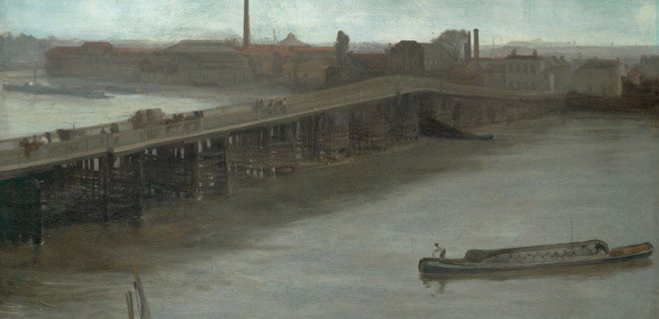
Above photograph by me of the memorial stone; below Arrangement in Grey and Black No.1 (1871, Musee D'Orsay, Paris)

Sunday, 28 April 2013

Flurry of Activity


Thursday night to the Corsica Studios in Elephant and Castle to see Guapo.  Previously unknown to me, I was very impressed: 3 intense pieces in about an hour, all instrumental, echoes of King Crimson c.1973/4 and Sonic Youth - very glad I went.  The auguries were good when the first person I saw in the audience as I walked in was Daevid Allen.  Thank you Haunted Shoreline for recommending them.

Friday to The Carlisle pub in Hastings for The Pretty Things.  With two original members Phil May and Dick Taylor (surely the most ancient-looking guitarist in a long-serving rock band, but still capable of rocking out) - highlight for me was the songs from Sf Sorrow, the blues interlude still couldn't illuminate the blind spot I have for this music - rollicking finish after about two hours - very enthusiastic crowd.  It's a bit sad that such a venerable group are still playing pubs, although obviously it's great from the fans' point of view.  Previous time I saw them they had Arthur Brown narrating and David Gilmour on guitar at a special show of Sf Sorrow - Soft Boys supporting.  Also got a signed copy of the latest version Sf Sorrow on Friday.

Saturday Weekend Otherworld at Goldsmiths was interesting if very tiring - I really struggled to stay awake on the train back.  Also noted how little the yoof in that area had changed since my last visit: still full of very drunk, lairy, short-haired men looking for trouble.  By way of contrast went to Rye today to see Nigel Ogden play the famous Rye Wurlitzer - if you've never heard his show The Organist Entertains you've missed a peculiar treat.

Aldbourne, Wilts

We recently did a bit of legend tripping and managed to visit the location for much of the Dr Who Daemons series, the quiet village of Aldbourne - photos taken by me - the pub was renamed The Cloven Hoof during filming.

Saturday, 13 April 2013

Weekend Otherworld

A reminder about this fascinating event at Goldsmith's College at which I'm booked to speak early on in the proceedings about my latest book (which has almost sold out now) - I'll be sharing the bill with Haunted Shoreline (see Blog List opposite).  Organised by the indefatigable English Heretic.  Other speakers/performers/artists include John CussansLisa CradduckBlue Firth,  Nicola Woodham, Ken Hollings and Dean Kenning.

Wednesday, 10 April 2013

The Mystery of Subterranean Selfridge’s (Repost)


Addendum: 10th April 2013
As I intend to talk about this topic tomorrow night at Kensington Central Library (Standard article here) I thought it was about time that I asked Selfridge's press office about this long-standing rumour.  They told me it was a myth started by the Ghosts of Oxford Street film, as I always suspected.  Funnily enough, a few months ago, I was emailed by the City of Westminster Archives Centre who had been contacted by a man who swore that he had visited a street of shops beneath Selfridge's in his youth.  Text of the original post (one of my most popular) below:


At the talk for the South East London Folklore Society last week an audience question came up yet again about the existence of a perfectly preserved Victorian street of shops somewhere beneath Oxford Street. I think that the first time this came to my notice was when I was asked about it by Robert Elms during my first appearance on his radio show c.2001; at the time I honestly professed to know nothing about it and the whole thing seemed pretty absurd to me. It has since resurfaced (so to speak) on numerous occasions. I did say at the SELFS talk that I would look into this tale one more time and put my findings on the blog. The result has turned out to be more interesting than I might have thought.

Searching on the internet you can find a number of threads devoted to this topic. On one for example someone poses the question:

Does anybody know anything about the supposed Victorian High Street underneath the present Oxford Street? Evidently Oxford St was raised up years ago but there is a tunnel underneath where the original cobbled road still stands and the part [sic] facias of Victorian shops. Or is this just an urban myth?

In my Folklore of London book (2008) I wrote this [original text not the edited published version]:

‘Viewers of the 1991 Channel 4 Christmas Special The Ghosts of Oxford Street, directed and narrated by Malcolm McLaren were treated to a rare sight: behind a door in the basement of Selfridges there survives a complete underground Victorian street, perfectly preserved, with period frontages intact, supposedly lying directly beneath the modern street above. This piece of trickery has since entered London’s subterranean folklore and references to it continue to appear in magazines and on websites.’ My information was taken from various discussions about the film on the internet; perhaps naively I assumed that one or two of these participants had actually viewed it.

At the time that I was writing my folklore book I tried to obtain a copy of The Ghosts of London but it wasn't out on dvd and didn't appear on You Tube or anything similar; nobody I knew had recorded it. Last week, however, another audience member told me that it could now be seen on 4od, Channel 4’s tv on demand website. So yesterday I finally managed to see this intermittently entertaining former rarity (with a ridiculous performance from Leigh Bowery) on my laptop and guess what? I cannot find the scene filmed in a preserved street of Victorian shops under Oxford Street.

Selfridge’s certainly features heavily (the whole of part 2 of the 54 minute film is devoted to it) and there is a scene where Tom Jones dressed in Edwardian [?] costume (as Gordon Selfridge presumably) descends on an escalator to a floor of the store where the staff are dressed in period clothes – Twenties-looking to me, although the displays and products are modern. Other scenes take place inside Regency/Victorian rooms or sets or outside modern Oxford Street shops.

The main candidate must be the section on Thomas de Quincey (1785-1859), played by John Altman, filmed in what looks like a set dressed to signify decadent dilapidation – it may be intended to represent shops as an obviously non-authentic sign reads ‘Boots apothecary’. There are however no ‘perfectly preserved’ Victorian shop fronts, nothing to indicate that it lies beneath Selfridge's and, owing to the camera position, no view of a cobbled street. On the same thread mentioned above another contributor claims that:

‘John Altman who played Nick Cotton in Eastenders… was in a bit of the film apparently actually under Oxford Street where there still exists part of this Victorian Street…He claimed Malcolm McLaren let him through a hole in the basement of Selfridges.’

In another scene the present-day (1991) McLaren chases an actor playing his younger self into the Eisenhower Centre secure storage facility in Chenies Street. The boy descends in an old-fashioned ‘cage’ lift to a dimly lit tunnel that could be part of the former deep level shelter beneath Goodge Street tube station (you can also hear a tube train in the background, although this could have been added in post-production). Security Archives appear in the credits, so it seems that this sequence was filmed within that facility.

By a strange coincidence the deep level shelter was used by Eisenhower (in his capacity as Supreme Commander of COSSAC, later absorbed into SHAEF) and his officers for a period during the Second World War, after he had rejected an annexe of Selfridge’s at No.14 Duke Street W1 - ‘a sizeable steel and concrete structure blessed with deep basements running 45 feet down’ - which later housed the SIGSALY code-scrambling computer.

It should also be borne in mind that the now defunct Mail Rail/Post Office Railway (opened 1927, closed 2003) runs around 70 feet down, just to the north of the section of Oxford Street on which Selfridge’s stands. The Central line, opened as the Central London Railway from Bank to Shepherd’s Bush on 30th July 1900, also runs under the bustling thoroughfare. All the above is covered in my book Subterranean City, beneath the streets of London.

My copy of The Twopenny Tube by Bruce & Croome (1996) says on p23: ‘The large store of Harry Gordon Selfridge was being built near Bond Street station in 1908 and opened on 15th March 1909. Selfridge used many innovative marketing initiatives, but his suggestion that Bond Street station be renamed Selfridge’s was cold shouldered by the railway.’

If you think about it logically, had this street really managed to survive intact, it is incredible that it has not been opened to the public as an attraction or 'vintage retail experience' – especially given its hugely busy and tourist-heavy location.

I have never had a behind-the-scenes tour of Selfridge’s myself, but a reporter from Time Out who has, certainly did not uncover anything unusual, although it’s interesting that while she makes no mention of the ‘preserved street’ she does refer to an alleged ‘abandoned tube station’ (article posted on the Time Out website on 10 November 2006):

‘We start by heading down into the basements. Myths abound about this subterranean world and, sadly, most of them are just that. There is no abandoned tube station, though Selfridge did lobby to get an underground tunnel built from Bond Street station up into the store – and have the station renamed ‘Selfridges’. Neither was there a river running through it – though there was an artesian well that served the building for years.

There are two levels of basement beneath the lower-ground shop floor: the ‘sub’ and the ‘sub-sub’, descending 60 metres below street level. These are split into two more areas: the dry sub and sub-sub, and their ‘wet’ equivalents. The wet area, more dank than watery, is beneath the original building, while the dry is under the rear building, known as the SWOD (after the four streets – Somerset, Wigmore, Orchard and Duke – that once enclosed it).

During WWII, the SWOD’s basement was used by 50 soldiers from the US Army Signal Corps; there were even visits from Eisenhower and Churchill. The building had one of the only secure telex lines, was safe from bombing, and was close to the US Embassy on Grosvenor Square. According to Jarvis, a tunnel was built from Selfridges to the embassy so that personnel could move between the two in safety. Interrogation cells for prisoners were hewn from the uneven space available.’

With reference to the last two sentences, do we have another folkloric ‘secret tunnel’ to add to the hundreds supposedly under London? This is the first time I've seen reference to a tunnel from Selfridge’s to the American Embassy, but as it was constructed during wartime, as many other similar tunnels and shelters were, it cannot be dismissed totally. Perhaps when the American Embassy site is vacated in 2017 more details will come to light.

Could this now firmly established piece of subterranean folklore be based on a misremembering of a small part of the Ghosts of Oxford Street that was, as far as I know, only shown on the one occasion in 1991; the urban legend does not appear to predate that year (Robert Elms asked me about it ten years later). The film had not subsequently been readily available on video or dvd (although some people must have taped it presumably?) so this fascinating misinterpretation (possibly coupled with the John Altman comment –if indeed that was ever actually said - or deliberate misinformation from the arch-prankster and former Situationist McLaren) became known through word of mouth, programmes such as the Robert Elms show and the internet? I shall have to go with this theory for now.


Wednesday, 27 March 2013

Quatermass and the Daemons


Bit of a Nigel Kneale fix over the weekend.  Finished reading The Twilight Language of Nigel Kneale with contributions from amongst others Sukhdev Sandhu, Roger Luckhurst, Mark Fisher and China Mieville- recommended.  Dr David Pike who wrote an interesting book with a very similar title to mine observes:

Since the nineteenth century, representations of underground space have tended to split into two forms; an organic, mythic and mostly negative underworld associated with hell and the devil and an inorganic, technologically-based and mostly positive underground purged of associations with the other form.  Kneale's are not the only representations to explore the interactions of the two undergrounds, but they are some of the most conscious and thoroughgoing of them, especially during the post-war years when what I call the 'bunker fantasy' - belief in the capacity of a buried concrete pillbox to preserve and improve modern society - was the dominant spatial ideology.'

On this topic see also Paul Virilio's Bunker Archaeology.

Also watched the Dr Who series The Daemons which I hadn't seen for over 40 years and hasn't been available on DVD until fairly recently.  First broadcast in 1971 it had a great impact on my young mind, especially the scary demon that's evoked in the church crypt (not the silly Bez-like gargoyle).  It didn't disappoint, but I could now see the very obvious debt it owed to my favourite film Quatermass and the Pit.  Such as?...oh, how about: an alien spaceship that's lain buried for thousands of years until it's uncovered by a team of archaeologists and starts to cause havoc locally; the aliens have visited Earth every now and then to influence world events (Renaissance, Industrial Revolution etc); their appearance inspired images of the Devil throughout history; they can be repelled by iron etc.

Roger Delgado's Master plays a Crowleyesque role as a bogus priest : 'Do my will shall be the whole of the Law' he utters on a couple of occasions and attempts to placate the demon by preparing hippy chick assistant Jo Grant for the sacrificial altar in the rather unsatisfying conclusion.  Filmed in the Wiltshire village of Aldbourne (called 'Devil's End, another QATP reference) the pub is renamed the Cloven Hoof and all kinds of diabolical destinations are indicated on local road signs.  All this and some malevolent Morris Dancers.  Well worth watching.

Thursday, 21 March 2013

All the Devils are Here


Today reread All the Devils are Here by David Seabrook, first read on publication 2002.  It's a kind of sleazier, more prurient version of Sebald's The Rings of Saturn with north-east Kent substituting for Suffolk.  Very well written and entertaining, covering many areas of interest including Margate: TS Eliot; Rochester & Chatham: Charles Dickens, Richard Dadd; Ramsgate & Broadstairs: John Buchan, various British fascists; Deal: Charles Hawtrey, Freddie Mills, Richard Arne and a number of gay men who retired there (mainly because of the close proximity of the Royal Marines School of Music).  I did think of moving to Deal about ten years ago (not for that reason!) but the trains to London were ridiculously slow (improved now by a Javelin service).  Count Stenbock even manages to put in a brief appearance and whatever could a 'map of Ireland' be sexual slang for?  The answer may lie here.

An obsessive interest in the Freddie Mills murder resulted in Seabrook's next book Jack of Jumps about the bizarre unsolved 'Jack the Stripper' murders in the 1960s, which I haven't read but which received criticism for its unsympathetic portrayal of the female victims; Cathy Unsworth wrote a much more sympathetic novel about the case: Bad Penny Blues - because, she told me, she didn't like Seabrook's book.  In All the Devils are Here Seabrook is an unreliable narrator, whose sexuality is unclear - he seems to have been a rather strange and lonely character.   In 2009 this expert on the works of Marcel Proust was found dead in his flat in Canterbury aged 48, probably of a heart attack, although there were rumours (very unlikely) that he was murdered.

Thursday, 28 February 2013

April Events

A number of talks and events are coming up in April - some of them part of Cityread London.  On Thursday 4th I'll be talking about underground London at Paddington library 6.30-7.30pm.  The following Thursday (11th) it will be a talk on Legends of Underground London at Kensington Central Library, starting at 6.30pm.  On Thursday 25th there will be another Salon for the City at Westminster Reference Library - I'm not sure who the speakers are going to be quite yet (I'm not taking part until June) .  Saturday 27th sees the most interesting event, under the auspices of the ever-resourceful English Heretic, Weekend Otherworld to which I shall be making an early contribution.

I shall be on BBC London Radio with Andy Ryan of Cityread on Saturday 6th April at 8.15am - then it's off to work.

The only time I'll have the opportunity to talk about my latest book will be at the Goldsmiths event.  I thoroughly recommend it, there will be some fascinating speakers including writer philosopher and cultural theorist Mark Fisher (see K Punk blog opposite).

Sunday, 24 February 2013

The Abbey of Thelema, Sicily


A five-minute taxi ride from Cefalu station will bring you to the car park of an ugly football stadium from where you can get a fairly close-up view of the former Abbey of Thelema, notorious as the home of Aleister Crowley and a small group of disciples in the early 1920s.  A number of videos can be found of the interior in various states of distress, such as this one when Kenneth Anger made one of his visits.  Apparently the house has been on the market for a while but it would appear that there have been no takers so far.  These photos were taken by me on Thursday 21st February.